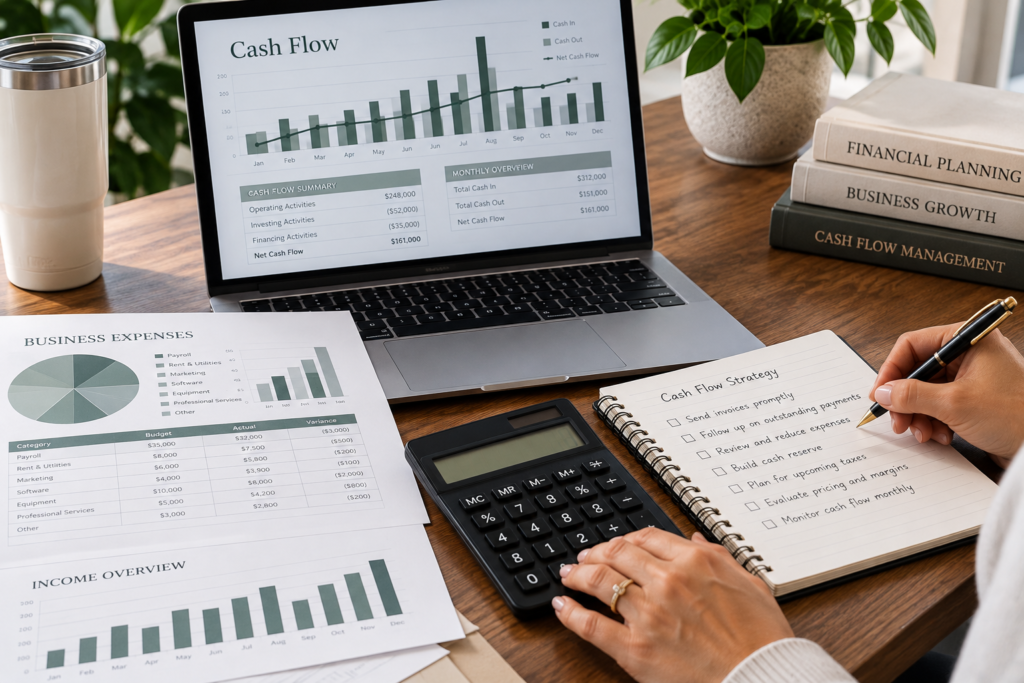
Cash flow is one of the most important indicators of a business's financial health. Even a company generating strong sales and reporting a profit can experience financial difficulties if it doesn't have enough cash available to cover its expenses.
For business owners, understanding how money moves into and out of the company is essential for maintaining stable operations, paying employees, meeting financial obligations, and planning for growth.
The good news is that there are practical strategies businesses can use to improve cash flow and build a stronger financial foundation.
At White Olive CPA, we help business owners understand their financial information, identify potential challenges, and make informed financial decisions.
What Is Business Cash Flow?
Cash flow refers to the movement of money into and out of a business during a specific period.
Cash inflows may include:
- Customer payments.
- Revenue from products or services.
- Loan proceeds.
- Owner contributions.
- Proceeds from selling business assets.
Cash outflows may include:
- Employee wages.
- Rent and utilities.
- Inventory purchases.
- Equipment expenses.
- Loan payments.
- Taxes and insurance.
- Vendor payments.
Positive cash flow generally means more cash is coming into the business than going out during a given period.
Negative cash flow occurs when cash outflows exceed inflows.
While occasional negative cash flow may be expected during expansion or major investments, persistent cash shortages can create financial pressure.
Why Is Cash Flow Management Important?
Effective cash flow management helps business owners maintain enough available funds to meet their obligations.
Without reliable cash flow, businesses may struggle to pay vendors, cover payroll, invest in growth, or respond to unexpected expenses.
Consistent cash flow monitoring can help businesses:
- Identify potential cash shortages.
- Prepare for upcoming expenses.
- Improve financial planning.
- Reduce reliance on emergency borrowing.
- Make informed hiring and purchasing decisions.
- Evaluate opportunities for growth.
Understanding cash flow also helps business owners distinguish between profitability and actual cash availability.
1. Invoice Customers Promptly
One of the simplest ways to improve cash flow is to reduce delays between providing a product or service and requesting payment.
Businesses that wait days or weeks to send invoices may experience unnecessary delays in collecting revenue.
Consider establishing a consistent invoicing process that includes:
- Sending invoices promptly.
- Clearly stating payment terms.
- Including accurate billing information.
- Offering convenient payment methods.
- Following up on outstanding balances.
Automated invoicing tools may also help businesses maintain consistency and reduce administrative work.
2. Review Accounts Receivable Regularly
Accounts receivable represents amounts customers owe your business for products or services already provided.
A company may report significant revenue while still experiencing cash shortages if customers have not paid their invoices.
Reviewing an accounts receivable aging report can help identify overdue balances and collection patterns.
Business owners may consider:
- Sending payment reminders.
- Establishing consistent collection procedures.
- Reviewing credit terms for customers.
- Requiring deposits for certain projects.
- Offering electronic payment options.
The objective is to improve the timing and reliability of customer payments while maintaining positive client relationships.
3. Monitor and Control Operating Expenses
Business expenses can gradually increase without owners realizing how significantly they affect cash flow.
Regular expense reviews help identify unnecessary spending and opportunities to operate more efficiently.
Consider reviewing:
- Software subscriptions.
- Office expenses.
- Vendor contracts.
- Insurance costs.
- Marketing expenses.
- Equipment maintenance.
- Professional service fees.
Not every expense should be reduced. Some investments support productivity, customer service, and long-term profitability.
The goal is to understand which expenses provide value and which may be unnecessary.
4. Build a Cash Flow Forecast
A cash flow forecast estimates the money expected to enter and leave a business over a future period.
Forecasting can help business owners prepare for upcoming obligations and identify potential cash shortages before they occur.
A basic cash flow forecast may include:
- Beginning cash balance.
- Expected customer collections.
- Anticipated operating expenses.
- Payroll and tax obligations.
- Loan and financing payments.
- Planned equipment or capital purchases.
- Projected ending cash balance.
Forecasts should be updated regularly as actual results and business circumstances change.
For businesses with variable revenue or significant upcoming obligations, a rolling 13-week cash flow forecast can provide useful short-term visibility.
5. Establish a Cash Reserve
Unexpected expenses are a normal part of operating a business.
Equipment repairs, seasonal slowdowns, delayed payments, and changes in customer demand can affect available cash.
Maintaining a cash reserve may help businesses manage these situations without immediately relying on additional financing.
The appropriate reserve depends on factors such as:
- Fixed monthly expenses.
- Revenue stability.
- Industry conditions.
- Customer payment patterns.
- Existing debt obligations.
- Access to financing.
A CPA or financial advisor can help evaluate an appropriate reserve target based on the company's circumstances.
6. Evaluate Inventory and Purchasing Decisions
For businesses that maintain inventory, purchasing decisions can have a significant impact on cash flow.
Excess inventory ties up funds that could otherwise be available for operating expenses.
Insufficient inventory, however, may result in lost sales or operational delays.
Business owners should evaluate inventory turnover, purchasing schedules, demand patterns, and supplier terms.
Improving inventory management may help reduce unnecessary cash commitments while supporting customer needs.
7. Negotiate Appropriate Vendor Payment Terms
The timing of outgoing payments can influence available cash.
When appropriate, businesses may be able to negotiate payment terms with vendors that better align with customer collections and operating cycles.
Potential considerations include:
- Extended payment terms.
- Scheduled payment arrangements.
- Volume-based purchasing agreements.
- Early payment discounts when financially beneficial.
Businesses should continue meeting contractual obligations and avoid late payments that could damage supplier relationships or create additional costs.
8. Review Pricing and Profit Margins
Strong sales do not necessarily produce strong cash flow if products or services are priced too low.
Business owners should periodically review pricing and profitability to ensure revenue adequately supports operating costs.
Important considerations may include:
- Direct costs.
- Labor expenses.
- Overhead.
- Gross profit margins.
- Market conditions.
- Customer demand.
Pricing changes should be evaluated carefully, considering both profitability and competitive positioning.
9. Plan for Taxes Throughout the Year
Unexpected tax obligations can create significant cash flow pressure.
Businesses may need to prepare for income taxes, payroll taxes, sales taxes, and other applicable obligations.
Maintaining accurate accounting records and reviewing projected tax liabilities throughout the year can help owners plan for upcoming payments.
Depending on the business, setting aside funds regularly for expected taxes may reduce the risk of cash shortages when payments become due.
Working with a CPA can help business owners understand their obligations and coordinate tax planning with cash flow management.
10. Use Financial Reports to Make Better Decisions
Accurate bookkeeping provides the foundation for effective cash flow management.
Business owners should regularly review financial reports, including:
Cash Flow Statement
Shows how cash moved through operating, investing, and financing activities during a period.
Profit and Loss Statement
Summarizes revenue, expenses, and profitability.
Balance Sheet
Provides information about assets, liabilities, and equity at a specific point in time.
Together, these reports help business owners understand both financial performance and available resources.
Common Cash Flow Mistakes to Avoid
Several common practices can contribute to cash flow problems:
- Waiting too long to invoice customers.
- Failing to follow up on overdue payments.
- Expanding without adequate financial planning.
- Overlooking upcoming tax obligations.
- Purchasing equipment without evaluating available cash.
- Confusing revenue or accounting profit with cash on hand.
- Failing to maintain accurate bookkeeping records.
- Making financial decisions without reviewing forecasts.
Recognizing these issues early can help businesses improve their financial processes.
When Should You Seek Professional Cash Flow Guidance?
Business owners may benefit from professional accounting or financial advisory support when:
- Cash shortages occur frequently.
- Customer payments are consistently delayed.
- Revenue is growing but available cash remains limited.
- Financial reports are difficult to interpret.
- The business is preparing for expansion.
- Major financing or equipment purchases are being considered.
- The company needs more structured budgeting and forecasting.
Professional guidance can help identify the underlying causes of cash flow challenges and evaluate potential improvements.
Frequently Asked Questions About Business Cash Flow
What is the fastest way to improve business cash flow?
The most effective immediate actions depend on the business. Reviewing overdue invoices, accelerating collections, reducing unnecessary spending, and improving payment processes may help increase available cash.
Can a profitable business have negative cash flow?
Yes. A business can report a profit while experiencing negative cash flow because of delayed customer payments, inventory purchases, debt payments, or other cash commitments.
How often should businesses review cash flow?
Many businesses benefit from monthly reviews. Companies with tight cash positions, significant seasonal changes, or rapid growth may need weekly monitoring.
What is a cash flow forecast?
A cash flow forecast estimates future cash receipts and payments to help business owners understand expected cash availability.
Can a CPA help improve cash flow?
A CPA can help analyze financial statements, evaluate cash flow patterns, develop forecasts, and identify financial management opportunities. Actual results depend on the business and the strategies implemented.
Improve Your Business's Financial Clarity With White Olive CPA
Healthy cash flow supports stable operations, informed decision-making, and long-term business growth.
By improving invoicing practices, monitoring expenses, planning for taxes, and regularly reviewing financial reports, business owners can develop a clearer understanding of their cash position.
White Olive CPA provides accounting, tax planning, and financial advisory services to help businesses better understand their numbers and prepare for future financial decisions.
Contact White Olive CPA today to discuss your business accounting and cash flow planning needs.
This article is intended for general educational purposes and does not constitute individualized tax, legal, or financial advice.